
The call almost always starts the same way. A client sold a property, the exchange funds are sitting with the qualified intermediary, and nothing on the market hits the price point they need. You've shown them everything in range and none of it clicks. That's the exact moment an agent either loses momentum on the deal or picks up the phone and finds out about improvement exchanges for the first time.
A 1031 improvement exchange lets your client buy a replacement property for less than what they sold and put the leftover exchange funds into renovating or building it out, all while deferring the capital gains tax on the sale. Consult your tax advisor for guidance specific to your client's situation, since the numbers work differently for every deal. But for you as the agent, this strategy solves a business problem too: it keeps a client who might otherwise stall out, and it hands you a bigger, more interesting deal than a straight like-for-like purchase.
This post covers what an improvement exchange means for your business, not just your client's tax return.
Key Takeaways
- An improvement exchange widens your client’s search beyond “equal or greater price,” since renovation cost counts toward the replacement value requirement.
- You don’t need to explain the tax mechanics — just know the option exists and loop in an experienced QI early, ideally before the relinquished property is listed.
- Agents often end up coordinating between the QI, lender, title company, and contractor, since no one else naturally sees the whole timeline.
- A bigger purchase price on the replacement property can mean a bigger commission, plus a client relationship strengthened by solving a problem other agents couldn’t.
- The same 45-day and 180-day deadlines apply, with no extensions — get your client’s timeline right from the first conversation.
Why Improvement Exchanges Expand Your Client's Search (Beyond "Equivalent Price")
Most agents already know the basic rule of a 1031 exchange: to fully defer the capital gains tax, your client has to buy a replacement property worth at least as much as the one they sold. That rule shapes how you search. You pull comps at or above the sale price and start showing from there, and when nothing in that range excites the client, the search stalls and the relationship starts to cool.
An improvement exchange changes that math. Your client can buy down in price and use the leftover exchange funds to improve the replacement property, and that improvement cost counts toward the value needed for full deferral. A property that needs a new roof, an updated unit mix, or a full gut renovation isn't off the table anymore. It might be the better deal, and it's very likely the deal nobody else showed your client.
This works through an Exchange Accommodation Titleholder, an EAT for short, which is an LLC the qualified intermediary sets up to hold title to the replacement property temporarily while the improvements happen. Your client's exchange funds pay for the purchase and the construction draws through that structure, and once the improvements are done or the exchange clock runs out, ownership transfers to your client, either by deed or by handing over the LLC itself. The property they end up owning has the improvement value built in, and so does their equity position.
For you, the search widens in both directions. Instead of only showing properties at or above the sale price, you can bring your client options below that price with real upside, then use the improvement budget to close the gap. That's a bigger conversation to have, and a better one.
A Realtor Who Turned a Stalled Search Into a Bigger Commission
The investor wasn't chasing a bigger version of the same property. After years spent fixing up a 12-unit townhouse-style building, he wanted more doors and a real chance to diversify, not another like-for-like trade. Then a strong offer came in, and that goal ran straight into a wall: everything in the 12- to 20-unit range was either overpriced or worn into rough class-C condition. (This example is a composite built from deals like it, not one specific client, but it plays out close to this often.)
The agent working that search found a 20-unit property priced well below the exchange proceeds, in a neighborhood the agent knew cold. On paper it looked like a downgrade, and the agent's first call to us started with something close to, "I found one, but he's not going to love the number." But the agent knew the local rent comps well enough to see that a renovated unit mix could support meaningfully higher rents, and brought the deal to us before the client went under contract.
That early call is what made the deal work. The EAT went up, exchange funds covered the purchase and the first wave of renovation draws, and the property came out the other side with rents roughly 50% higher than the old 12-unit had produced. The client kept the same equity and debt load they walked in with and grew cash flow substantially. The agent closed a bigger transaction on a higher purchase price, picked up two referrals since, and now gets a call before the client even lists a property.
Spotting Replacement Properties with Redevelopment Potential
Once an improvement exchange is on the table, your job shifts a little. You're not just looking for a like-for-like match anymore. You're looking for properties with room to grow into more value than their sticker price suggests.
That might mean a dated multifamily property that needs unit renovations to hit market rents. It might mean a commercial building with functional issues that a straightforward buyer would pass on but that pencils out fine once the improvement budget factors in. It can even be a vacant lot or greenfield site where your client builds new construction from the ground up, all inside the exchange, covering costs like site grading, foundations, and utility buildout with exchange funds before a construction loan picks up the rest.
Local market knowledge does more work here than in a standard search. You know which neighborhoods are turning over, which property types are underpriced because of deferred maintenance rather than a real location problem, and which vacant parcels have zoning that supports what your client wants to build. Bring that knowledge to the table explicitly instead of just running a standard comp search.
Talk to your client about their tolerance for a renovation project versus a turnkey purchase too. Some investors love the idea of adding value through improvements. Others want nothing to do with a construction timeline. Knowing that up front saves everyone time and keeps you from showing properties the client was never going to consider.
Your Role Coordinating the QI, Title Company, Lender, and Contractors
Improvement exchanges have more moving parts than a standard deferred exchange, and agents are often the ones holding the deal together while those parts move. There's a QI managing the EAT structure and the exchange funds, a title company handling the temporary title arrangement, a lender if your client is financing part of the purchase or the improvements, and usually a contractor doing the actual work.
None of those parties naturally talks to all the others. You do. The QI knows the exchange rules but isn't managing the renovation schedule. The contractor knows construction but doesn't know the exchange deadlines. Agents are frequently the ones who see the whole picture and can flag when something's about to fall out of sync, like a contractor's timeline that doesn't fit inside the exchange window, or a lender who needs documentation the title company hasn't produced yet.
You don't need to manage every detail of the construction draw schedule yourself. Knowing who needs what from whom, and when, keeps the deal moving and keeps your client from getting blindsided by a delay nobody flagged early enough. Agents tend to catch these gaps faster than anyone else on the deal, which is exactly why you stay looped in through closing rather than just at the start.
| Deal Stage | What You Do | What WealthBuilder Does |
|---|---|---|
| Before the sale closes | Introduce the client to us early, before the relinquished property is under contract | Set up the exchange paperwork and answer the client's first-round questions |
| 45-day identification window | Source replacement properties, including ones below the sale price with upside | Confirm the identification list and improvement plan meet IRS requirements |
| EAT setup and purchase | Coordinate with the title company and lender on the closing timeline | Form the EAT, acquire the property through it, and hold the leftover exchange funds |
| Construction and draws | Connect the client to contractors and track the renovation timeline against the deadline | Review and pay approved invoices from the exchange account |
| Conveyance | Stay in touch with the client for the next deal | Transfer title or LLC ownership to the client once the exchange closes |
Standard Listing vs. Improvement Exchange Referral
A straight listing and an improvement exchange referral look different from the moment the client mentions they're selling. Here's how the two compare from an agent's side of the desk.
| Factor | Standard Listing/Purchase | Improvement Exchange Referral |
|---|---|---|
| Commission structure | One deal, one commission | Often a bigger purchase price plus a stronger shot at repeat and referral business |
| Deal complexity | Straightforward comps and contract | More parties involved, but you're seen as the one who pulled it together |
| Agent's role | Find a match, negotiate, close | Educate the client on the option, source undervalued properties, coordinate the team |
| Client retention likelihood | Depends on how the search goes | High, since the client remembers who solved a problem other agents couldn't |
Helping Clients Think About Best Use of Exchange Funds
Not every dollar of exchange money should go toward the flashiest upgrade. Part of your value here is helping your client think through what actually improves the property's marketability, rent roll, or resale value, versus what just spends the budget. Worth noting: exchange funds cover capital improvements like a new roof, mechanical systems, or ground-up construction, but they can't be used for furniture, fixtures, or equipment, so set that expectation with clients before they start planning the interior design.
A kitchen remodel might move the needle on a single-family rental. A new roof or updated mechanical systems might matter more for a commercial property, even though it's a less exciting improvement to talk about. Your client is going to lean on you for a read on what buyers and tenants in your market actually pay for, and that's a conversation worth having early, before the improvement budget gets locked in.
This also ties back to the client's bigger picture. Some clients are building a long-term rental portfolio and want durable, low-maintenance improvements. Others plan to sell again in a few years and care more about curb appeal and finishes that show well. Ask where this property fits in their overall strategy before you help them decide what to spend on.
None of this is tax or legal advice, and your client's CPA or attorney should weigh in on the exchange structure itself. Consult your tax advisor for guidance specific to your situation is a line worth passing along to clients directly. But the practical, market-facing side of "what's worth improving" is squarely in your lane.
Building a Relationship With a QI You Trust
Most investors don't know improvement exchanges exist as an option, and that's not a knock on them. It's a specialized corner of exchange rules, and standard deferred exchanges (the simple sell-one-buy-one kind) make up roughly 94% of all 1031 exchanges nationwide. Improvement exchanges are the exception, not the norm, so not every QI handles them regularly.
That matters because an improvement exchange has extra steps that need to happen early and correctly, like standing up the EAT before the replacement property closes. This structure exists under IRS guidance known as Revenue Procedure 2000-37, which is what allows a QI to hold temporary title while work gets done, and it has to be set up right. The 45-day identification and 180-day completion deadlines in a 1031 exchange are hard calendar dates with no extensions — there's no asking the IRS for a few more weeks because the construction ran long. The clock doesn't wait.
We're WealthBuilder 1031, a nationwide qualified intermediary led by Chris Peterson, a licensed Texas real estate attorney, and improvement exchanges are a structure we handle regularly. Being attorney-owned matters here because it's your name attached to the referral, and you want confidence the QI can actually execute on an EAT. We're insured and bonded, work with agents nationwide, and stay in the loop from the first phone call through the day title transfers back to your client.
Build a relationship with a 1031 improvement exchange specialist the same way you'd keep a trusted plumber or electrician in your contact list. You want someone you can call before the deal is even under contract, not someone you're vetting for the first time under a deadline. If you're not sure what a qualified intermediary actually does in a 1031 transaction, it's worth getting familiar with that role too, since it's the one guiding your client through every deadline in the exchange.
Is This the Right Client to Refer?
Refer this client if:
- They're sitting on exchange proceeds and can't find a like-value replacement they actually want to buy as-is
- They already own investment property and understand basic landlord or investor economics
- They're open to a renovation or construction timeline, even a light one
- They have, or can get, financing lined up if the improvement budget exceeds their leftover exchange funds
- They value your read on the local market enough to loop you in before they call anyone else
This probably isn't the right fit if:
- They need to close on a replacement property in the next two or three weeks with zero flexibility
- They have no appetite at all for construction risk or timeline uncertainty
- They're exchanging out of a primary residence, since Section 1031 doesn't apply to personal-use property
- The leftover exchange funds are small, more like a few thousand dollars than tens of thousands, which usually doesn't justify the extra structure
Frequently Asked Questions
Will I stay involved through closing?
Yes. We loop the referring agent in from the first call through the final transfer of title, not just at the handoff, because agents catch scheduling and communication gaps faster than anyone else on the deal.
Will referring my client to a QI mean I lose control of the deal?
No, it usually means the opposite. Your client still relies on you to source properties, read the local market, and coordinate with the title company and contractors, and clients tend to trust the agent who brought in the right specialist even more afterward.
Is this too complicated to explain to my client?
You don't need to explain the tax mechanics in detail. Tell your client that exchange funds can buy a lower-priced property and improve it, and that a qualified intermediary handles the rest, then let us take the technical questions from there.
What's in it for me beyond the commission I'd get anyway?
A bigger purchase price often means a bigger commission on this deal, and a client who remembers you solved a problem another agent couldn't tends to send referrals and come back for the next transaction.
Do I still get paid if the deal takes longer than expected?
Your commission structure is between you and your client or brokerage, not something the exchange timeline changes. Improvement exchanges do run on the same 180-day clock as any 1031 exchange, so build that timeline into your expectations up front.
What if my client wants to build instead of buy finished?
That's a greenfield improvement exchange, and it works the same way structurally: exchange funds cover the purchase and the first stage of construction costs like engineering, site work, and utility buildout, with a construction loan often picking up the rest.
What if my client's lender isn't familiar with improvement exchanges?
This comes up often, since lenders don't see this structure as much as a standard purchase. We work directly with the lender to explain how their security (the note, the personal guarantee, the deed of trust, and the lien) stays intact even though the EAT temporarily holds title.
How much does WealthBuilder charge for an improvement exchange?
Our fee for improvement and reverse exchanges is a flat $6,500, which covers setting up and managing the EAT structure. That's different from our standard deferred exchange fee, since improvement exchanges require the extra legal work of a temporary titleholder.
Bring Us In Before the Deal Stalls
An improvement exchange gives you more ways to say yes to a client's search, not fewer. It's a meaningful edge for any agent working with investor clients, and it starts with knowing the strategy exists and having a QI relationship in place before you need one.
If you have a client considering an improvement exchange, WealthBuilder 1031 can help you both through it. We're a nationwide qualified intermediary experienced in improvement and reverse exchanges. Call 888-508-1901 or visit WealthBuilder1031.com to talk through a deal.
This article is for educational purposes only and does not constitute legal or tax advice. Advise your clients to consult their own tax advisor or attorney regarding their specific situation.
Disclaimer: This content is for informational purposes only and does not constitute legal or tax advice. Consult your tax advisor or attorney for advice specific to your situation.

Chris Peterson — Texas Licensed Attorney & Founder, WealthBuilder 1031
Chris is the Owner and President of WealthBuilder 1031 and a licensed Texas attorney. He graduated from Wheaton College and the University of Texas School of Law and speaks regularly to realtors, accountants, and title companies about 1031 exchanges. Learn more →
Have Questions?
Chat with one of our team members to see if a 1031 Exchange is right for you, (without committing to anything).
Video Resources

Case Studies
August 14, 2026
Reverse Improvement Exchange: Combining 1031 Strategies
Most investors who call us about advanced 1031 strategies are wrestling with one complication, not two. Every so often, someone finds a replacement property that
Read More
August 7, 2026
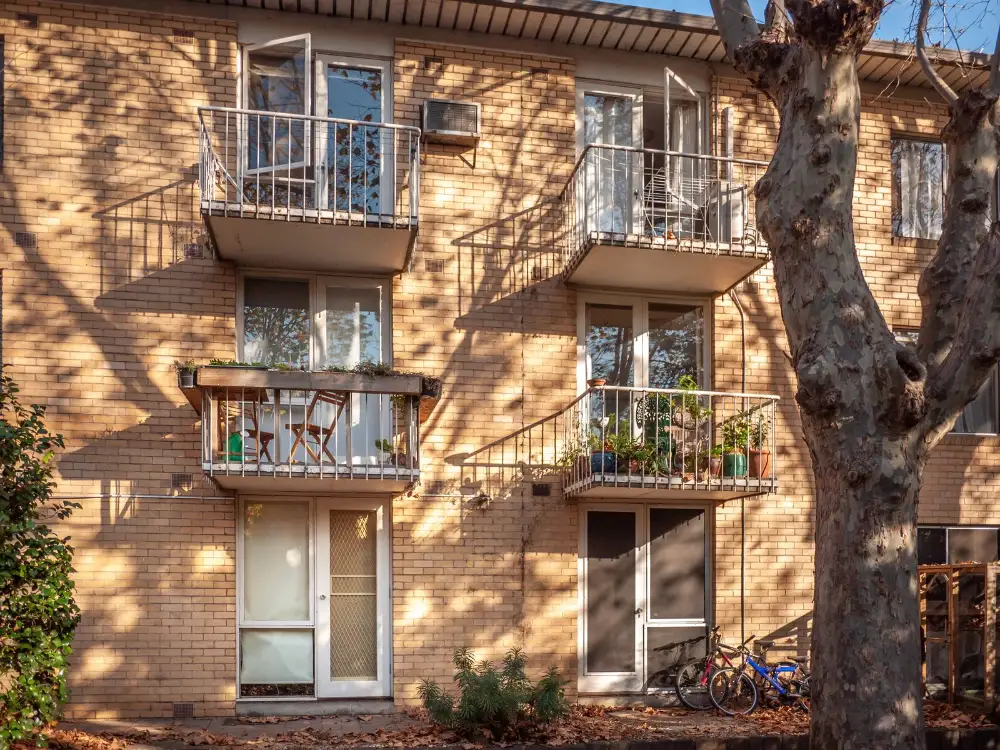
Case Study: Turning 12 Units Into 20 With an Improvement Exchange
When he called us, our client wasn't looking for a bigger version of the 12-unit apartment complex he'd just agreed to sell. He was looking
Read More

August 4, 2026
Can You Do a 1031 Exchange on a Fix and Flip? Probably Not
If you searched "1031 exchange fix and flip," you're probably staring at a property you just renovated and wondering if you can defer the tax
Read More
Get Started Today
It is easy to get started on your exchange. You can either call our office directly at 888-508-1901, or you can fill out our Start Your Exchange form.
Start Your Exchange